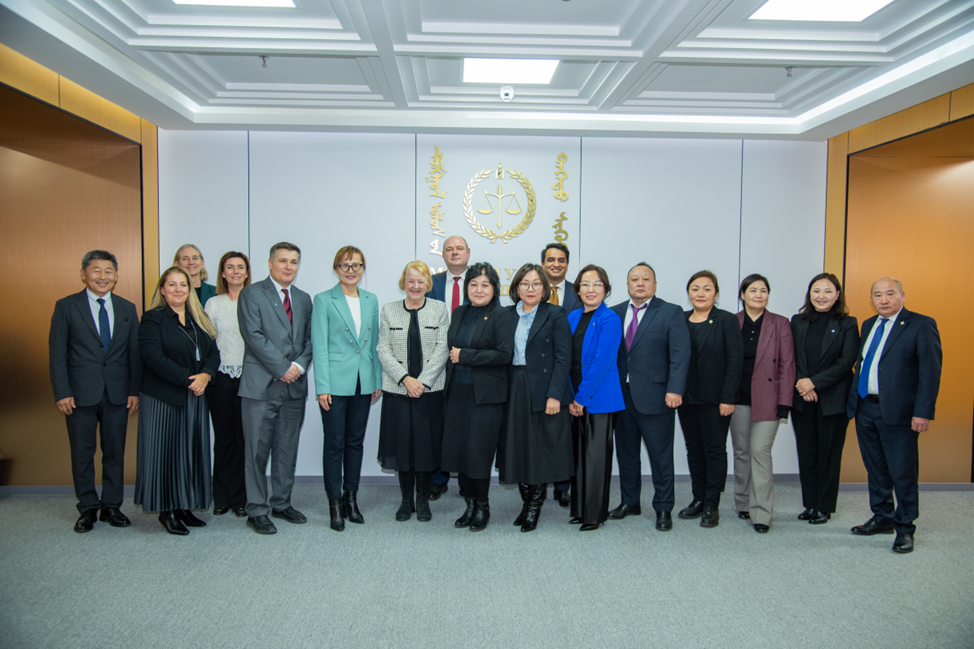
The meeting entitled “Meeting of Judicial Institutions: Advancing People-Centered Justice and Strengthening Public Trust” was held on 19 October 2026.
The meeting was attended by Bayarmaa Nyamdoo, Presiding Justice of the Civil Chamber of the Supreme Court of Mongolia; Justice Battseren Bataa; Zolzaya Puntsag, Chairperson of the Judicial General Council; Council Members Janchivnyambuu Osordeleg, Ulziijargal L. and Erdem-Undrakh Kh. ; Enkhtur S. , Chairperson of the Judicial Disciplinary Committee; N. Odontuul, Judge of the District Circuit Court of First Instance for Simplified Criminal and Civil Proceedings; Erdenechimeg Dashpuntsag, Director of the Judicial Academy; and a delegation from the International Development Law Organization (IDLO), led by its Director-General, Jan Beagle, and Charles Bolland, IDLO Country Representative in Mongolia.
Participants exchanged views on recent reforms and priority areas in Mongolia’s judicial sector, reviewed the results and lessons learned from cooperation with IDLO, and discussed ways to improve access to justice, enhance judicial transparency and strengthen public trust.
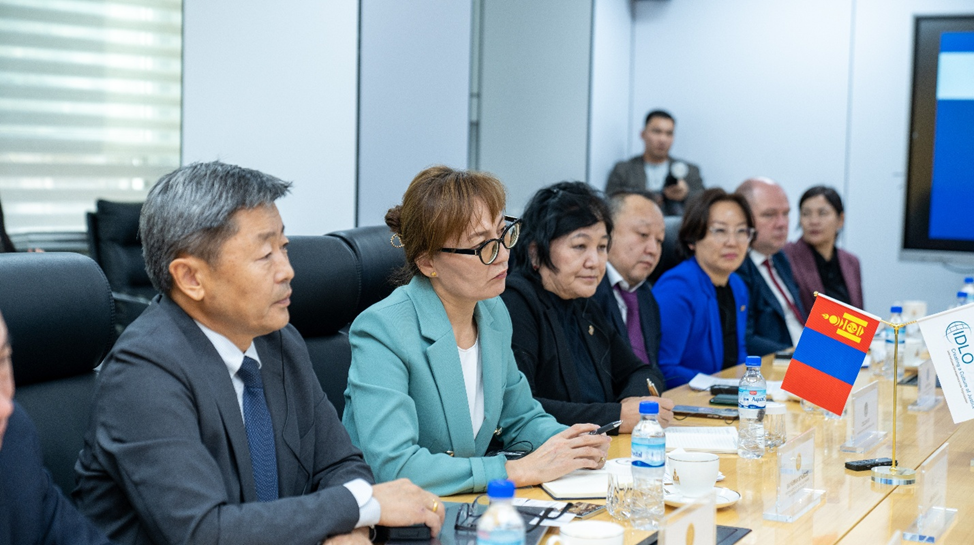
In her opening remarks, Bayarmaa Nyamdoo, Presiding Justice of the Civil Chamber of the Supreme Court of Mongolia, highlighted the close cooperation between Mongolia’s judicial institutions and IDLO in implementing a number of important projects in recent years, particularly the Strengthening the response to Gender-Based Violence in Mongolia (2025–2030) project and the Judicial Engagement and Transparency Project (2024-2026) project.
She noted that the Specialized Family and Children’s Court would commence operations on 1 November 2026. Two weeks earlier, IDLO and the Judicial Academy had jointly organised a specialized training programme for judges on adjudicating family and children’s cases, attended by more than 220 judges who will serve in local courts and specialized courts.
Justice Bayarmaa expressed her belief that the establishment of the Specialized Family and Children’s Court would mark a significant shift in the protection of human rights and children’s rights in Mongolia, bringing greater recognition of children’s participation and perspectives in judicial proceedings.
She explained that, previously, family and children’s cases had been handled under ordinary civil proceedings, which sometimes failed to adequately account for the specific circumstances of such cases. As a result, victims of child abuse and domestic violence could occasionally fail to receive the attention they deserved. She expressed hope that the establishment of the specialized court would address these shortcomings and pave the way for further development in judicial proceedings involving specific human rights issues.
She also highlighted the development of two comprehensive handbooks under the Strengthening the response to Gender-Based Violence in Mongolia (2025–2030) project: Proceedings Involving Domestic Violence and Criminal Offences and Violations Committed by Minors and Family Law and Family Court Proceedings.
Furthermore, she emphasized that the cooperation had provided valuable opportunities to study and gain first-hand knowledge of international best practices. As a result, there was growing recognition of the value of considering the approaches adopted in the Republic of Korea and Japan in designing the operational model of Mongolia’s Specialized Court System: Children`s Rights and Family.
Describing IDLO as one of the organisations that best understands the fundamental needs of judicial institutions and works closely with them, Justice Bayarmaa expressed her hope that future cooperation would further expand victim-centred proceedings and support the development of people-centred judicial processes in Mongolia. She also called for methodological and foundational knowledge support to advance the next phase of judicial reform.
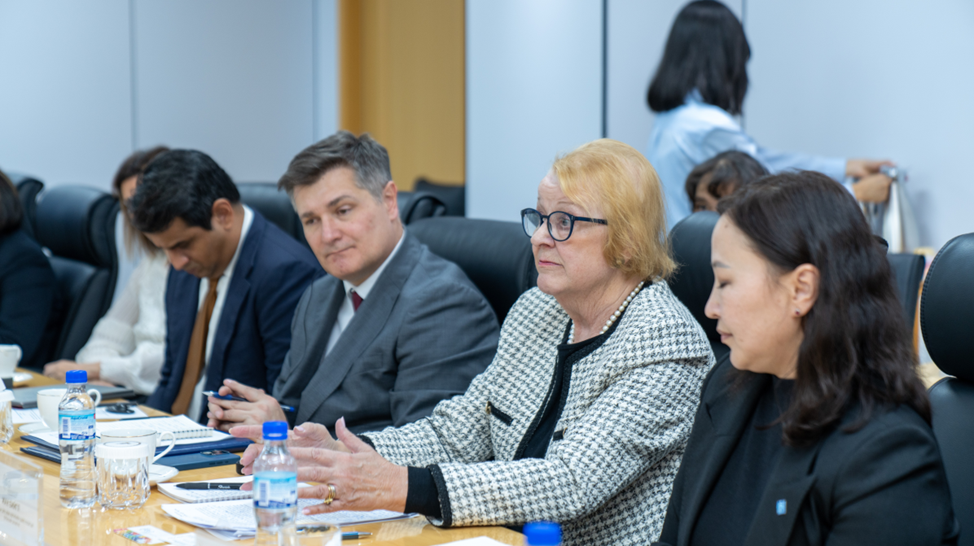
IDLO Director-General Jan Beagle is paying an official visit to Mongolia from 15 to 22 October 2026.
In her remarks, Mrs.Beagle noted that the partnership between the two sides was strong and emphasised that successful outcomes were the result of collective efforts. She stated that the parties had worked together for many years towards the shared goal of strengthening a more accessible, transparent and people-centred justice system.
With the specialised Family and Children’s Court preparing to commence operations, she stressed the importance of ensuring that the court is supported by a multidisciplinary team of professionals, including psychologists and social workers.
Mrs. Beagle also shared her observations from her visit to Umnugovi Province, where she met with public administration officials, civil society organisations, members of the public and representatives of crime prevention sub-sectors. She noted that those she met had emphasized the importance of improving inter-agency cooperation, a view with which she agreed. She stressed that effective crime prevention requires the collective efforts of public institutions and all members of society.
Looking ahead, Mrs. Beagle underscored the need for IDLO to further expand its partnerships and adopt a comprehensive approach to judicial and legal assistance, child protection services, shelters and rehabilitation services. She also highlighted the importance of increasing public awareness and trust in the judiciary through cooperation with the media and civil society organisations. In addition, she called for greater mobilisation of available resources and closer engagement with the private sector to promote social well-being, including increased private-sector investment in strengthening social protection systems.
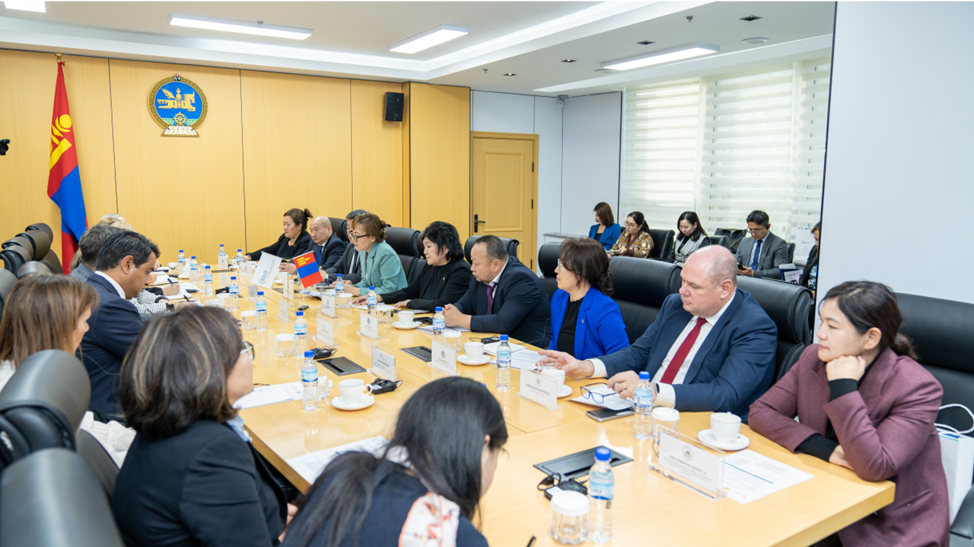
The discussion was moderated by Odontuya N. , IDLO Programme Lead, and focused on activities implemented and lessons learned under Phase II of the Strengthening the response to Gender-Based Violence in Mongolia (2025–2030) project and the European Union-funded Judicial Engagement and Transparency Project (2024–2026) project.
The first session addressed victim-centred approaches, the principle of the best interests of the child, the operations of the Specialized Family and Children’s Court, and the development of a specialised judicial system for adjudicating family and children’s cases.
During the session, Supreme Court Justice Battseren Bataa noted that society was increasingly recognising that family and children’s cases were not solely matters for the courts, but required cooperation among institutions and across sectors. He emphasized, however, that the judiciary should serve as the central coordinating institution within this system.
He explained that certain good practices from Canada had been incorporated into the design of Mongolia’s Specialized Family and Children’s Court. In particular, the relevant legislation provides for the integration of criminal and civil proceedings within the court’s operations.
Justice Battseren also noted that Mongolia adopted the Law on Child Protection in 2024, establishing a legal framework for child protection. However, effectively implementing this framework remained a major challenge, one in which the judiciary should take a leading role.
In this regard, he noted that the Chief Justice of the Supreme Court of Mongolia had established a working group comprising representatives from various sectors. He emphasized the importance of discussing the interdependent elements of the child protection system, identifying existing challenges and building a common understanding of how the system could function effectively.
During the discussion, Zolzaya Puntsag, Chairperson of the Judicial General Council, stated that the family was the foundation of society. She emphasized that changing mindsets had been a key priority in preparing for the operations of the specialized court.
She further highlighted the need to ensure the continuous training, professional development and capacity-building of specialists in family and children’s matters over the long term. She also pointed out that purpose-built court facilities meeting the required standards for handling family and children’s cases were needed.
Charles Bolland, IDLO Country Representative in Mongolia, highlighted the organisation’s efforts under the Judicial Engagement and Transparency Project (2024–2026) project to strengthen public relations and cooperation with the media and civil society organisations, thereby promoting greater openness in the judiciary.
He noted that the project had delivered meaningful results through initiatives that, although seemingly modest, had made an important difference. In particular, cooperation with journalists had significantly improved public understanding of courts and judges across various sectors, providing a positive example of the outcomes achieved through joint efforts.
Mr. Bolland concluded by emphasizing that further work remained to improve Mongolia’s legal environment and reaffirmed IDLO’s commitment to continuing its support for the country’s judicial sector.